Spiritstead Production & Warehouse Buildings
Wood, food, and storage chains that keep Adventure Mode moving before spirits take over.
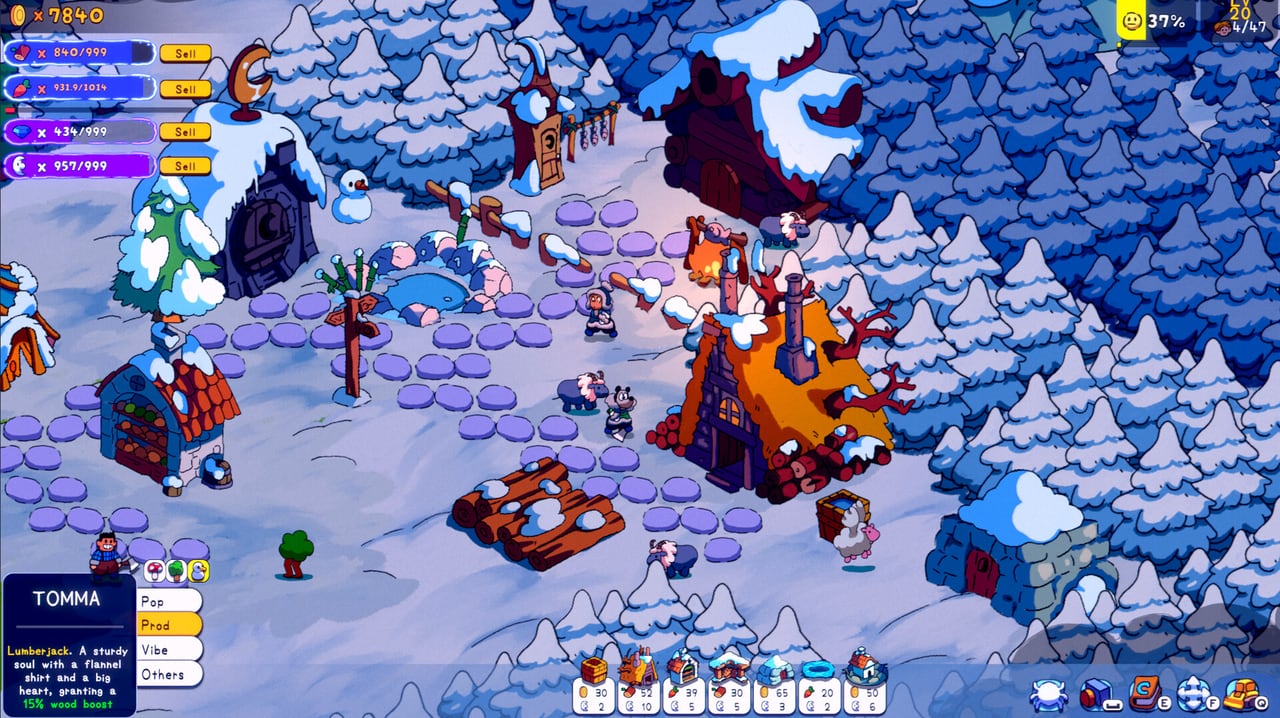
Spiritstead’s cozy fantasy still runs on spreadsheets — invisible ones tracking wood, food, and hauler trips between workstations. Production buildings transform map resources into goods villagers consume and construction menus demand: log cutting camps feed sawmills, farms and pumpkin plots feed bellies, chicken coops supply poultry for cooking (and Peppok unlocks), and wood warehouses plus food warehouses buffer everything so jobs never idle on empty inputs.
This guide maps the full production stack, recommended build order, layout rules, and how human chains connect to spirit buildings and housing growth. Open the buildings hub for happiness and decoration layers that production alone cannot solve.
Log cutting — first wood income
Log cutting stations (or lumber camps — terminology matches the in-game build menu) are almost always your first production placement after a house. Assign villagers by dragging them onto the structure; they chop nearby trees and deposit raw logs.
Tips:
- Place camps adjacent to dense tree lines in the Green Forest starter zone.
- Build a wood warehouse within short walking distance before adding a second camp — haulers waste shifts crossing town.
- Do not clear every tree immediately; regrowth or biome expansion may matter in later chapters per map guides.
Wood from log cutting constructs houses, bonfires, early farms, and paths toward sawmills.
Sawmills — processed construction wood
Sawmills convert raw logs into refined lumber for advanced buildings — larger houses, log cabins, markets, and spirit structures. Unlock timing varies by Adventure chapter; demo players hit sawmills mid-progression.
Chain layout: Log cutting → wood warehouse → sawmill → construction sites. Breaking any link stalls town growth.
Upgrade priority: One active sawmill beats three idle camps with no storage. Watch warehouse fill bars — if logs pile up unprocessed, assign more villagers or add sawmill capacity before another log cutter.
Farms and pumpkin plots
Farms provide baseline food income for small populations. Pumpkin plots (or pumpkin-specific farm variants) add variety tied to seasonal quests and cooking recipes in demo content.
Food math: Each house increases daily consumption. Before mass housing, ensure farm output × warehouse buffer ≥ projected demand plus one day of safety stock.
Placement: Farms belong on cleared flat tiles near food warehouses and eventually chicken coops for mixed diets. Keep farms away from pure forest industrial zones to reduce path crossover.
Spirit link: Stable food unlocks Peppok when you cook chicken — see how to unlock spirits. Peppok’s automation assumes coops or farms already feed the pipeline.
Chicken coops
Chicken coops produce poultry used in cooking quests and Peppok discovery. Coops pair with bonfires for roast meals that satisfy happiness and spirit triggers simultaneously.
Build order: Coop after first farm unless quests demand poultry first. Add food warehouse capacity when coops double output.
Common mistake: Cooking chicken before coops stabilize — you burn quest birds and wonder why Peppok never appeared. Stock warehouses, then cook deliberately.
Wood warehouses
Wood warehouses store logs and processed lumber near consumers. They are force multipliers disguised as boring boxes.
Rules:
- One warehouse per industrial cluster minimum.
- Place between log cutting and sawmill when possible so both directions benefit.
- Expand before territorial pushes toward Snow biome — distant camps fail without mid-map storage.
Food warehouses
Food warehouses mirror wood storage for crops, pumpkins, and cooked goods. Happiness crashes often trace to full warehouses blocking harvest jobs, not actual shortages.
Pair food warehouses with happiness buildings only after baseline fill rates stay green overnight.
Production build order cheat sheet
- Log cutting + wood warehouse
- Farm + food warehouse
- Bonfire (cooking + happiness — happiness page has detail)
- Chicken coop when poultry quests appear
- Sawmill when advanced blueprints unlock
- Pumpkin plots when quests or variety demand
- Duplicate warehouses before duplicating remote camps
Creative Mode skips gates — still follow order to learn economy pacing transferable to Adventure.
Assigning villagers to production
Drag-and-drop assignment defines Spiritstead’s clicker-adjacent loop. Best practices:
- Leave one villager floating during spikes to fill sudden sawmill gaps.
- Reassign from decorations back to farms during food crises — aesthetics can wait.
- Check villager happiness guide if workers refuse roles due to mood, not bugs.
Spirits automate slices of this chain post-unlock — Peppok for cooking, Scruffern for outdoor tasks — but never delete human camps early.
Connecting production to spirits and sanctuary
Crystal shards from spirit buildings depend on steady wood/food supply. Starving production pauses shard mining even if spirits stay assigned.
Mid Adventure, split map mentally:
- Industrial wedge — log cutting, sawmill, wood warehouses.
- Agricultural wedge — farms, coops, food warehouses, Peppok structure.
- Spirit fringe — crystal nodes and mining structures with road access to both wedges.
Sanctuary restoration in the Adventure walkthrough assumes this tripod exists before shard spending accelerates.
Troubleshooting stalled chains
| Symptom | Likely cause | Fix |
|---|---|---|
| Logs piling on ground | Missing wood warehouse | Build or move warehouse closer |
| Sawmill idle | No raw logs or no workers | Reassign villagers; add log cutting |
| Food icon flashing | Empty farms or full food warehouse | Expand storage; add farm/co op |
| Coop eggs unused | No cooking or warehouse space | Cook meals; expand food warehouse |
| Everything idle | Happiness or quest block | Check quests and happiness |
Related guides
- Housing — population that consumes your production.
- Happiness buildings — when bellies are full but faces are sad.
- Decorations — cheap morale patches.
- Spirits tier list — when to pause production for Peppok hunts.
Frequently Asked Questions
Quick answers to the most common questions.
What is the first production building in Spiritstead?
Log cutting camps are typically first, paired quickly with a wood warehouse so villagers do not haul logs across the entire village.
When should I build a sawmill?
Build a sawmill once Adventure unlocks processed wood recipes and your wood warehouse regularly fills with raw logs.
How do chicken coops relate to Peppok?
Coops supply poultry for cooking chicken at bonfires, which triggers Peppok. Stable coop output makes the unlock reliable.
Why do I need separate wood and food warehouses?
Each warehouse type accepts different goods. Mixing storage types is not supported — place both near their respective production clusters.
How many warehouses do I need?
At least one per cluster early game. Add another when haulers queue or fill bars stay capped during peak production.
Do spirits replace sawmills or farms?
No. Spirits automate specific tasks and mine shards. Human production buildings remain the backbone of wood and food income.